Fellow travellers of StrettoBlaster, we are back. Today, the old, battle-weary combo made by me, 2Mave, and the cool gentleman and wicked vinyl spinner, DJ Pio, is gonna dish out for you all yet another research in the history of indie labels.
You might remember that previously we went to Japan to shine some light on Handcuts Records, and to L.A. to tell you the Ill Boogie Records story, mining shiny antiques here and there.
This time, we ain’t going exotic, but we are staying in the belly of the beast, New York City. Precisely, we will explore a small imprint out of Queens. Bienvenue to you all into the depths of one of the jewels of that era, the legendary indie label, Intrattenimento Hydra.
It all started with a clear end: the uncompromising & untamed Hip-Hop music of Hydra Entertainment
Hydra started in 1994, but much of the output of Hydra Ent. was distributed between 1997 and 1999. Funny enough, but not outright unheard back then, the owner, Jerry Famolari, previously opened a label called Sneak Tip, focused on House music.
The Hydra label was co-founded and run by Mike Heron, the New York hip-hop producer and one-half of the Beatnuts-affiliated production team Ghetto Professionals, who later had a stint as A&R consultant with Rawkus Records.
To anyone who was out there back then, as well as to anyone who came after and tried to scavenge a bit deeper than its Spotify playlist, Hydra Entertainment (the only one to us, F- all the metal bygones you find online these days) usually means something unique. On that note, props to Robbie’s Unkut for interviewing both Famolari e Heron.
There were quite a few underground labels back then, and I personally plumbed the depths of a few of them before (All Natural Inc., anyone?). As hackneyed as it comes, Hydra, however, REALLY had something different.
A touch of genius: making those funky beats the focal point
These days, beat tapes are pretty common, constituting an everyday (and over-inflated, even) part of what we still call, for lack of a better definition, Hip Hop music. It wasn’t always the case.
Back in the Nineties, the concept wasn’t there yet. Yeah, we had The 45 King and other sparse and occasional things. We also had what could be called instrumental-hop (DJ Krush, DJ Shadow and a few others), but those weren’t really just beats.
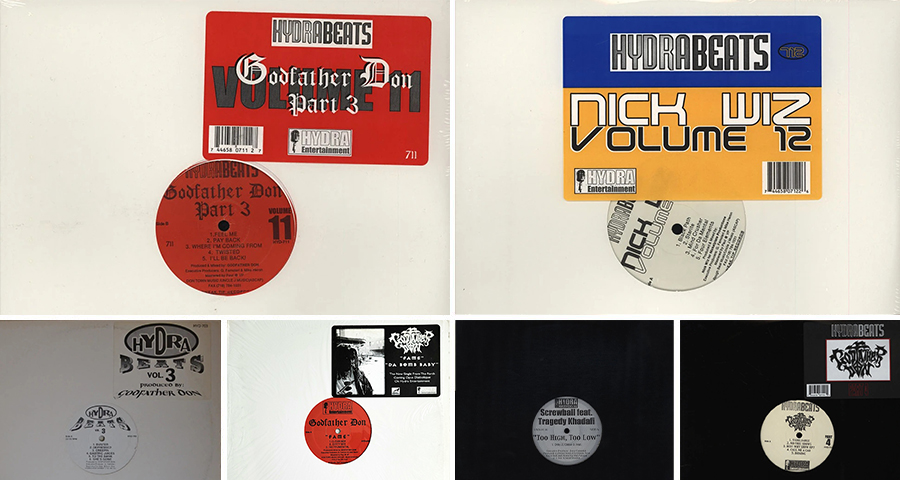
No one was taking producers and printing albums with their beats on, like serially. The guys from Hydra were the only exception. These guys were tapin’ beats before beat-tapes were even a thing. The incredibly innovative and iconic series called Hydra Beats spearheaded an entirely new way of conceiving beats and purportedly even listening to these.
From the underground supergroup The Beatnuts – clearly throwing in some leftover stuff – to names who you could only comment with “I haven’t the foggiest idea of who he is“, i.e. The Unsociables.
Hydra Beats hosted the beats of a bizarre, eccentric (word to Mike Heron) character like Godfather Don, but also one of the top producers in NY’s underground scene, Nick Wiz. A Kid Called Roots gave an interesting performance with his LP, only to disappear from the horizon quickly thereafter, while the Ghetto Professionals, that is V.I.C. and Mike Heron himself, also offered a solid contribution to this series.
Building the roster up: like-minded heads, ‘hood stories and street credibility
Hydra Records released music by a tight group of underground heavyweights. If we take a glance at the roster, the super-group Screwball basically was born with Hydra, and the Hydra team curated and produced also the records they made with Tommy Boy. The totality – and by far the best part – of Godfather Don’s ’90s discography was branded Hydra too.
His 2010 compilation of those singles is a trunk full of gold, not even Indiana Jones could resist the temptation to snatch ‘em. Even the High & Mighty published one single -specifically, one of their best- from their ’99 debut album with the label.
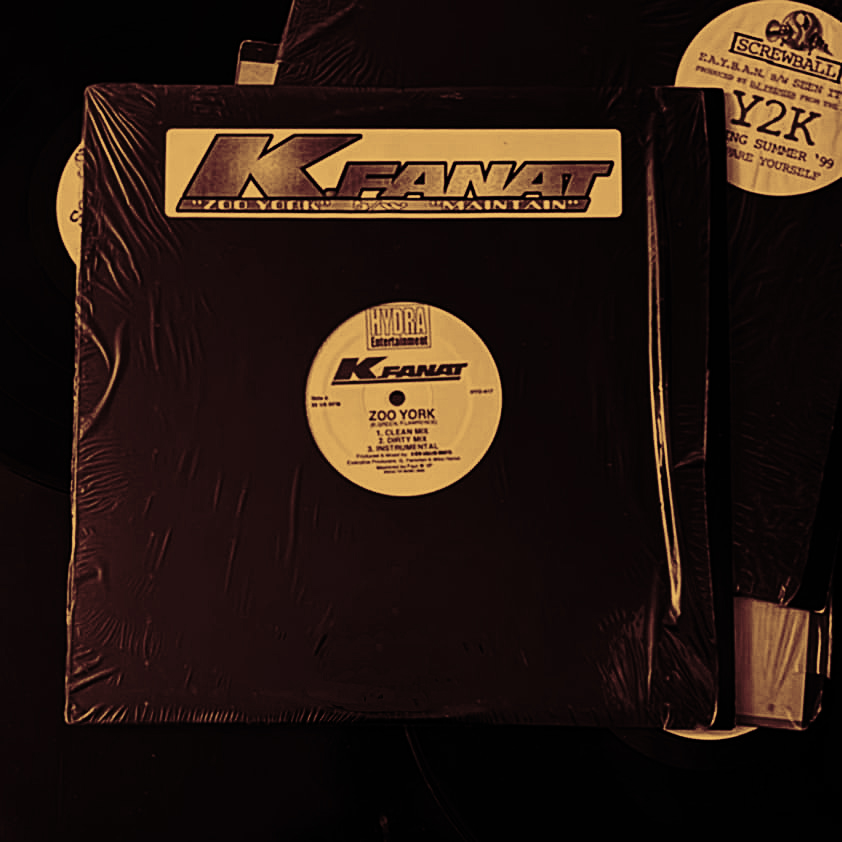
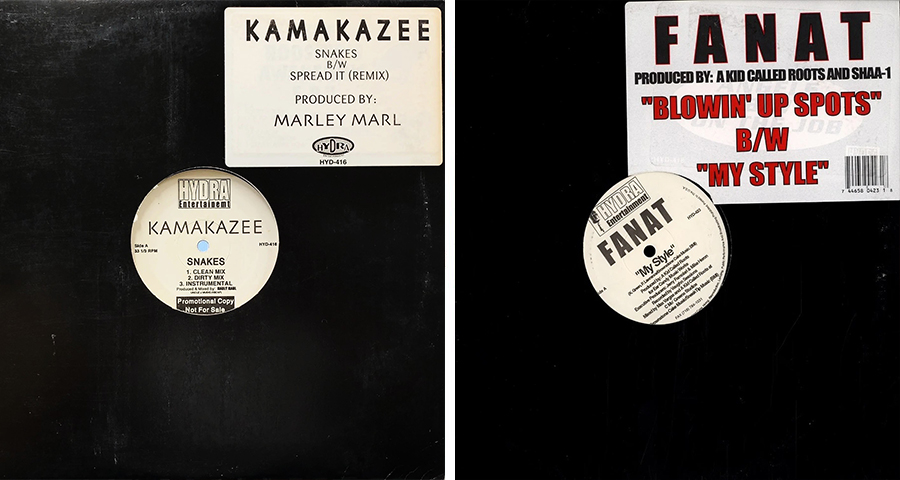
Aside from these big (well, big amongst the aficionados, let’s say) names, we can find tracks that were the staples of every respectable mid-late ‘90s mixtape, like K.Fanat’s “Zoo York” or I.G. Off And Hazardous’ “On The Air”. Records like these should be in your collection, one way or another, particularly because Hydra wasn’t skimpy on numbers, so they should mostly be cheap and really easy to find.
The seemingly inescapable trajectory of non-commercially minded Hip-Hop labels
The very size of the label itself made it quite probably unable to promote these projects as they wanted, no matter the underground buzz they were getting. Nonetheless, other meteors passed through the distribution mechanism of Hydra, leaving their ephemeral trace on the history of this music. Names like Slade Savage, Big Meal o Gab Gotcha as a soloist, or with his group called Triflicts, all had their chance through Hydra.
The label was able to publish the late Screwball emcee Hostyle only album, as well as one of the first trotting, Mike-Heron-produced steps in the industry made by an emcee called Joell Ortiz. After 2004, the label started slowly withering, fading away with much of the golden age mentality and way of doing things, only randomly putting out something here and there.
Hydra’s demise started slowly. First, Mike Heron went over to Rawkus. Then, a lot of inner tension started to happen within their main group, Screwball. Moreover, as for most of these indie labels, Hydra main limit was their initial capital base, so much so that most of the records they put out never had ads in magazines.
Indeed, the overproduction of underground singles in the late ‘90-early Y2K’s had an impact. However, as for most of the other labels we covered here, what hit ’em was the tides of the market that started to veer towards more radio-friendly sounds.
Majors ousted most of the independents that before were trying to carve out their space and thus the market created a new audience. Soon, Hydra’s kind of Hip Hop wasn’t faring well with listeners by then almost completely weaned on mainstream hip-hop outlets.
Overall, were they years too early, head of their times, too precocious for a scene devasted by the double punch of a genre in full pop-ish transmutation and a market still far from the small niche possibilities offered by the internet?
No light at the end of the tunnel, but an enduring legacy.
Or, how cool was this Hip Hop shit, before the bling-bling became the only legitimate gauge of everything?
In fact, the world has changed a whole lot since then. Now, mostly due to digital distribution and plummeting production costs, there is indeed more space for everyone, at least on a superficial level. In fact, unsurprisingly in an economic system famished for opportunity to valorize capital, mainstream media providers have learned how to diversify their game too.
Similarly to what happened with the grotesque nexus between fashion and streetwear, they colonized the field by making themselves look like they are indie, limited-edition, pop-up-storey things. Heck, most likely, even some of your favourite indie labels really aren’t that independent anymore.
As dismaying as this might sound, the quite ironic fact here is that a project like Hydra could probably have fared better if it had happened after 2010-ish. Break-beats, beats and so on didn’t really have a market anymore between 2000 and 2010, so financially putting out something like the Hydra Beats 12” series wasn’t really sound anymore, which was basically crippling Hydra’s most iconic product.
Actually, take cassette tapes full of beats. Hell, every single one of us wanted no more than the disappearance of the audiotapes back then – by far the worst, the more unnerving and hear-bleeding-inducing audio medium ever concocted by the human mind. Little did we know that a large part of today’s limited-edition beat tapes you can find online (Bandcamp, anyone?) are out via cassette tapes.
Irony of a melancholic history? Maybe so. In a sense, Hydra Entertainment was outdated, hence out of its time, and so, maybe, prefiguring a time to come. No matter how you think about it, they remain one of the most interesting experiments made by NY’s underground scene.
Pump up the volume and best regards, y’all!
Hydra Entertainment Tribute Mixtape
A musical selection by TwoMave mixed and recorded by DJ Pio.
01 Greatest On Earth – Screwball
01.5 Pure Elevation – Godfather Don
02 Life Ain’t The Same – Godfather Don feat. Mike L, Sir Menelik
02.5 Pseudo Mo Bee – A Kid Called Roots
03 War Stories – Slade Savage
04 Spread It (Remix) – Kamakazee
06 Da Bomb Baby – Godfather Don
06.5 Shotguns Locked – The Unsociables
07 Raw (Pt. 2) – Godfather Don
07.5 Executive Technology – Godfather Don
08 Status – Godfather Don
09 Genuine – Triflicts
10 Do You Know – Godfather Don feat. Big Lance
11 Sun, Moon & Stars – High & Mighty
12 Blowin Up Spots – Fanat
13 Niggas, Pimps, Players – Big Meal
13.5 Keep Bouncing – Godfather Don
14 Beat’Em On The Head – Hostyle
15 Zoo York – K. Fanat
16 In The Air – I.G. Off & Hazadous
16.5 Dante Ross – A Kid Called Roots
17 Dawn to Dusk – Powerule