The Modern Jazz Quartet: setting standards and eluding imitators
Fellow travellers, today’s mixtape is significantly different from the usual ones. While conceptually similar to the tribute we have dedicated to Ahmad Jamal, this time there is no precise anniversary or commemoration to mark the occasion.
Instead, it comes from a simple need: to make a statement through a mix.
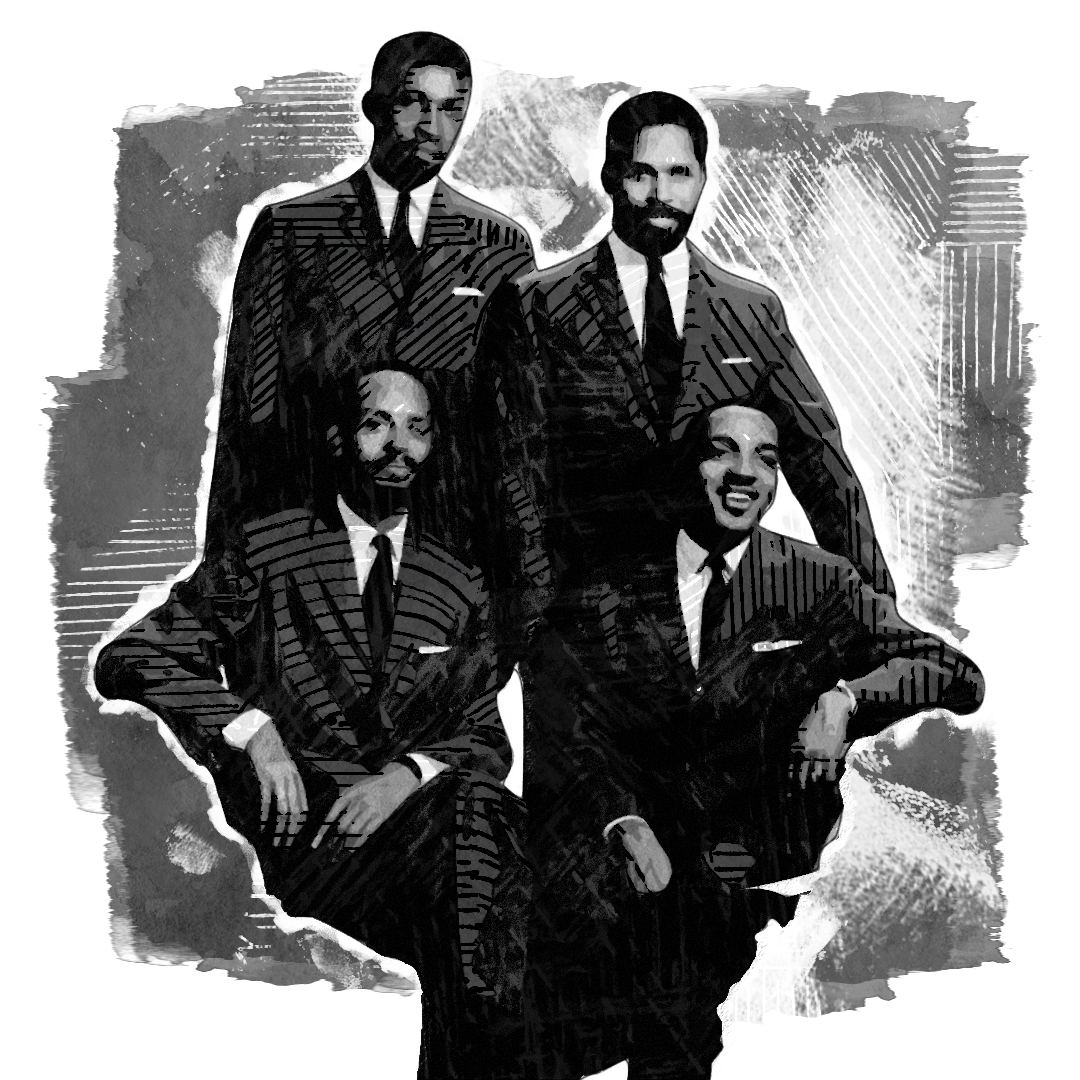
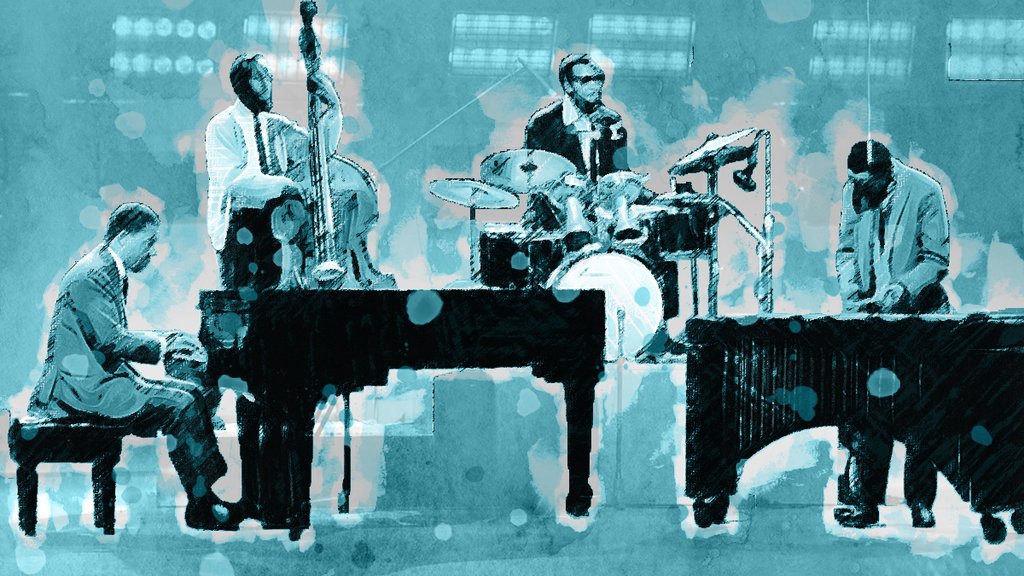
What follows is a deeply felt homage to what, in my humble opinion, remains one of the most significant, timeless and aesthetically profound jazz ensembles ever to take the stage: The Modern Jazz Quartet.
This is our take on their legacy — and on the way their music has echoed through hip-hop production, shaping the ears and imaginations of generations that came after them.
Looking back to move forward: a chronicle of an exploration of jazz music
When my love affair with jazz began, the person who introduced me to it eased me in gently, starting with swing and the big bands. But he made one thing clear very early on: there was much more to discover, and somewhere near the pinnacle stood four gentlemen in suits, playing some of the most profoundly refined jazz imaginable.
Fast forward many years: I’m sitting in a Jazz Kissa in Matsue City, Japan, listening to records with the owner and a few of his friends, talking jazz and drinking whisky. You know, the usual.
At some point, the conversation turns to favourite jazz albums. Mine, obviously, is an MJQ record.
The owner looks at me and starts telling me how, back when jazz was at the height of its popularity in Japan, one of his friends had formed a small band called…The Matsue Jazz Quartet.
It’s a small anecdote, but it probably tells you more about the mood behind what we’re doing here than any long explanation could. And maybe it gives you a hint of the why, too.
New York, 1952: cool jazz, partitures and the birth of the Modern Jazz Quartet
The Modern Jazz Quartet emerged during a transitional moment in the history of jazz: the rise of what came to be known as cool jazz.
In the years after the war and through the late 1940s, bebop in its various forms had largely defined the cutting edge of the music. But that dominance was soon challenged by a younger generation of musicians pushing toward a more restrained, refined and intricately arranged approach.
The movement is often associated with white musicians such as Gerry Mulligan, Stan Getz e Paul Desmond, but some of its most important early figures came directly out of the bebop world — Miles Davis most famously among them.
They shared with the boppers a penchant for experimentation, harmonic sophistication and rhythmic daring, but sought a different kind of intensity. Rather than relying on bebop’s explosive momentum, they often favoured space, control and a cooler emotional temperature, weaving complex arrangements into a quieter and more measured atmosphere.
There was also, in parts of the movement, a tendency to think of jazz in increasingly self-conscious terms: as serious music, even as something deliberately removed from the mainstream. The irony is that cool jazz would soon acquire almost the opposite image. Its clean melodic lines, subtle counterpoint and polished arrangements helped turn it into a sophisticated, “respectable” form of jazz — music that could sound perfectly at home in the elegant clubs and concert spaces of the West Coast.
This, roughly, is the backdrop against which the main character of our story — pianist, composer and future MJQ musical director John Lewis — was moving.
Lewis had already been involved in Miles Davis’ late-’40s Capitol sessions, contributing arrangements to what would become some of the defining recordings of the cool jazz era. But his connection with the musicians who would eventually form the Modern Jazz Quartet went back even further.
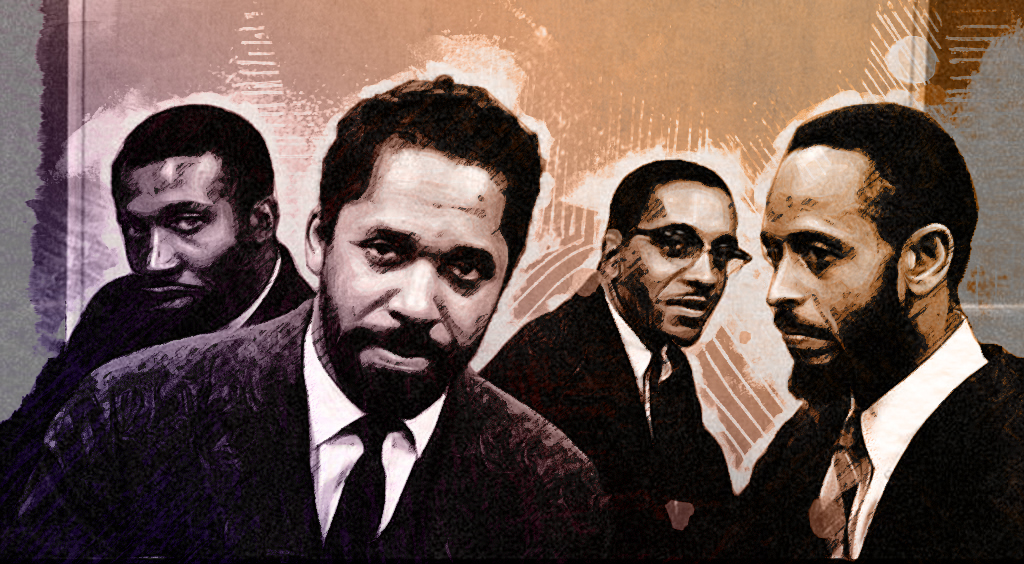
As early as 1946, Lewis, vibraphonist Milt Jackson, drummer Kenny Clarke and bassist Ray Brown were already playing together as members of Dizzy Gillespie’s big band rhythm section.
Then, on December 22, 1952, Lewis brought Jackson, Clarke and Percy Heath — by then replacing Brown on bass — into a Manhattan studio for a Prestige recording session.
The same core of musicians had already recorded together under the name Milt Jackson Quartet, but those sessions in the closing days of 1952 felt like something else: the first real glimpse of what was about to become the Modern Jazz Quartet.
A flicker of the quartet’s potential could already be heard in a remarkable 1951 concert recording, where the original line-up joined Sonny Rollins for an extraordinarily poised and crystalline reading of the standard In a Sentimental Mood.
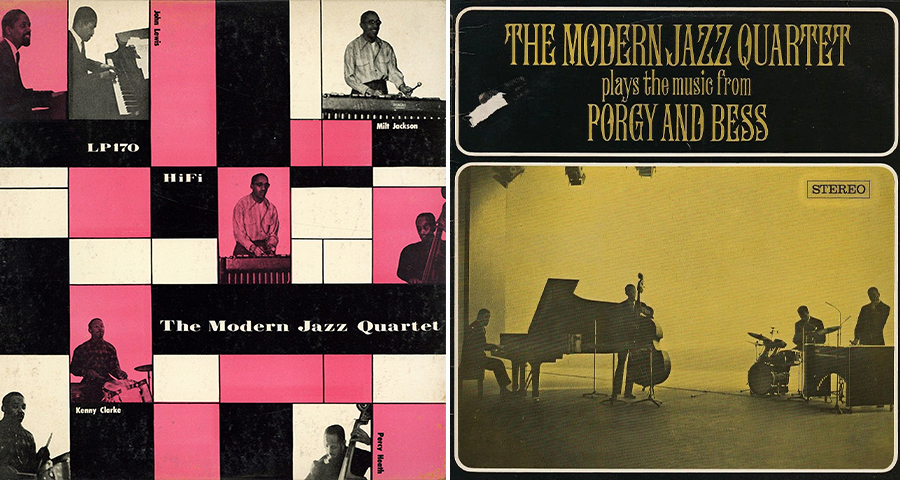
It was only in 1954, however, that the group truly began to define itself. A Prestige recording from that year introduced what would become one of the MJQ’s signature compositions: the two-part Django, written by John Lewis as a tribute to Django Reinhardt after his death.
That recording, and those that immediately followed, already contained the elements that would come to define the group: the careful coexistence of jazz improvisation and fugal counterpoint, European culture and African American musical tradition. Rather than simply placing those worlds side by side, the MJQ found a way to make them speak to one another — and that tension became one of the defining features of their sound.
In 1955, the quartet underwent its final change of personnel when Kenny Clarke moved to France and was replaced by Connie Kay. From then until Kay died in 1994, the line-up remained unchanged for almost four decades — an extraordinary degree of continuity in the notoriously fluid world of jazz.
A journey into sound: the undaunted aesthetic of the Quartet
From the very beginning of the group’s journey, Lewis carefully shaped both the aesthetic vision and the practical framework. While he was largely responsible for the artistic direction, the quartet had no formal leader and operated on a genuinely cooperative basis.
The machine, in other words, kept running smoothly.
In the history of jazz, the MJQ was perhaps the ensemble that most fully embodied the idea of playing effortlessly together. Much of this came from Lewis’s meticulous work as a composer and as the architect of the Modern Jazz Quartet’s distinctive sound: a musical unit built with care and clarity, designed to bring out the individual qualities of each member, while allowing them to become part of a larger whole.
Improvisation, both individual and collective, was thus absorbed almost seamlessly into compositions defined by elegant, dynamic and tightly controlled structures.
As Ted Gioia wrote, Lewis “constructed elaborate musical structures for Jackson to navigate, embellish, and, at times, subvert".
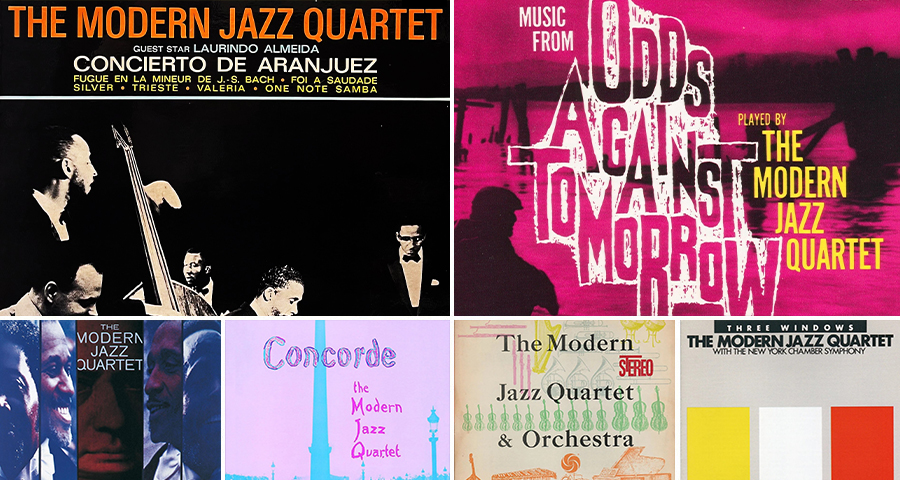
The Quartet’s music was therefore shaped by a constant tension between contrasting forces: discipline and freedom, structure and improvisation, refinement and instinct. That tension eventually came to a head in 1974, when Milt Jackson, increasingly frustrated by what he perceived as the constraints imposed by the MJQ’s musical framework, decided to leave the group for several years. The split came, remarkably, just after one of the quartet’s finest recordings: the masterpiece Blues on Bach.
This should hardly come as a surprise. Their career-long partnership had always rested on an extremely fragile, almost miraculous equilibrium.
By that point, Lewis was probably one of the most formally educated jazz musicians around. He had studied anthropology at the University of New Mexico before the war and later earned a master’s degree from the Manhattan School of Music. The classical music he had absorbed at home was reinforced by rigorous study and a distinctly academic approach to composition and arrangement—one that, however, never lost touch with either the blues or Charlie Parker.
Milt Jackson, meanwhile, was the man who almost single-handedly transformed the vibraphone into a fully modern jazz instrument, stripping away much of the ornamental excess that had previously characterised its style and replacing it with something looser, leaner and more expressive.
But Jackson was, by nature, a jam-session virtuoso and an improviser, drawn to a free-blowing kind of music that stood in almost direct opposition to Lewis’s formal rigour, intimacy and delicacy. Nor did the two men share the same social or cultural background.
And yet, despite their radically different musical temperaments, Lewis and Jackson were brought together by a shared taste for discreet, hummable melodies, deceptively smooth harmonies, subtlety and an understated sense of bounce.
It was on this common ground that the Modern Jazz Quartet could eventually come together again after what Lewis famously called their “seven-year vacation”, resuming their music almost as if nothing had happened, with the same immaculate poise as before.
Music, culture and short-circuiting trajectories: black tradition and European culture
The intellectual legacy of the cool jazz movement, spearheaded in large part by white musicians such as Gerry Mulligan and Dave Brubeck, was soon overtaken by other traditions and aesthetic priorities.
The Modern Jazz Quartet was the great exception. It continued to pursue the renewal and refinement of jazz form, albeit in a direction that ultimately led to very different results from those associated with cool jazz at its height.
The unorthodox cultural foundations of Lewis’s vision—rooted in a deep understanding of both the spirit and peculiarities of jazz and the history of classical and Baroque music—made the MJQ almost the antithesis of the familiar succession of improvised solos that had become common currency in so many jazz groups.
Far from being conservative or pretentious, as the group was often dismissed, the Quartet’s music possessed a very particular quality: it was deliberately, yet quietly, subversive. The group expanded the formal boundaries within which jazz was expected to operate, unsettling both conventional harmonic progressions and a song form increasingly locked into the familiar theme-solos-theme formula.
Creatively, under Lewis’s direction, the group displayed a voracious appetite for new sounds.
Plastic Dreams is a perfect example: an album that combines an engagement with contemporary musical language with a tribute to traditional English music. It is an experiment that never needs to announce itself as such, because every departure is meticulously considered and absorbed into an aesthetic framework that is already remarkably strong.
There was, however, more to the Modern Jazz Quartet’s music than a matter of style.
Behind it lay a precise vision of the role of jazz musicians—and Black jazz musicians in particular—within American society. That vision extended beyond music and became, in the group’s characteristically understated way, a quietly radical position in itself.
In John Lewis’s own words, as quoted by Joe Goldberg, “I am an American Negro… I’m proud of it, and I want to enhance the dignity of that position.”
Looking back, Milt Jackson expanded on the same idea from a different angle: “a lot of people think jazz musicians are dope addicts, drunks, and sex fiends, and you’re branded with that. But we’ve proved it isn’t so.”
Taking Jazz to new heights or flipping the table?
For a long time, the music of the Modern Jazz Quartet was met with a certain ambivalence by critics and listeners alike. It was widely praised for its refinement, formal control and harmonic sophistication, yet it was also often perceived—sometimes for very different reasons—as somehow removed from jazz stricto sensu.
Some critics saw in it a degree of inauthenticity, even a form of cultural subordination. Since jazz emerged from African American culture, the argument went, drawing too heavily on a European musical tradition risked suggesting that jazz needed to be elevated through values and forms imported from outside itself.
In this view, the appeal to classical models could amount to a somewhat snobbish search for external “respectability”. This was, for instance, the position taken by the eminent Italian jazz critic Arrigo Polillo.
Our view is quite different.
What John Lewis was attempting with the Quartet was, in effect, to turn jazz into the chamber music of modernity: a consciously constructed attempt to bring jazz to a formal level commensurate with its expressive potential content, while preserving its movement, language and defining stylistic traits.
What prevented this project from collapsing into mere postmodern juxtaposition was the clarity of its aesthetic conception. Lewis did not simply place one tradition beside another.
He absorbed selected elements from European classical music into a fundamentally jazz-based language and made them function from within it. Jazz remained the structural and expressive core; external elements—counterpoint and fugue, but also ideas drawn from folk traditions—were understood, filtered and transformed with complete command, becoming part of a coherent musical architecture rather than decorative additions.
All in all, what the MJQ achieved under John Lewis’s artistic direction was an interpretation of European musical culture rooted in an irrepressibly jazz foundation.
The aim was to enrich jazz through selected forms and techniques drawn from the European tradition—not, as critics such as Polillo seemed to suggest, to ennoble jazz by subordinating it to an external standard—while at the same time elevating the image and social role of the jazz musician.
And unmistakably, the MJQ’s music preserves an extraordinary elegance, stylistic coherence and precision of detail without ever slipping into the sterile self-absorption that afflicts so much contemporary jazz.
If the project overplayed its hand anywhere, it was not through some cultural subordination. Its real limitation lay instead in its intellectualism and in its profoundly cosmopolitan nature.
The Quartet consistently looked outward, towards a broader world of forms and traditions, but in doing so often remained detached from any specific social or historical conjuncture, from which jazz had traditionally drawn much of its energy.
This made it difficult for the group to establish a lasting dialogue with a clearly defined social constituency, and ultimately helped confine the MJQ to the status of a treasured, almost private pleasure for devoted listeners.
Inevitably, the Modern Jazz Quartet never produced a “school”. It remained, to a large extent, an isolated phenomenon.
Its direct influence on the subsequent evolution of jazz was limited enough that one could, at least in conventional historical narratives, tell the story of the genre without placing the group at its centre.
Indeed, this isolation was partly the result of a choice. The MJQ, and Lewis in particular, showed relatively little interest in positioning themselves within the broader currents of contemporary Black popular music, unlike figures such as Quincy Jones and others who actively moved between jazz and the changing musical languages around them.
The MJQ occupied its own summit, but it did so largely alone.
Perhaps this isolation was also inevitable within a jazz culture that increasingly moved in divergent directions: towards forms of self-referential virtuosity, towards crossover styles shaped by a market increasingly oriented to white audiences, as happened with much jazz-rock, or towards the more direct, commercially adaptable language of funk—despite the latter’s profoundly Black roots.
None of this diminishes the scale of the MJQ’s achievement. Its drive to innovate, refine and perfect the language of jazz still sets—or should set—a formidable standard. The group’s music is permeated by an immaculate, dazzling beauty. It is, quite simply, great music, and as such it transcends the limits of its own historical moment. It continues to speak beyond its time.
MJQ’s Journey through the Hip-Hop lens: a tenuous legacy
Let’s now come to the end of our business. This mix was built to trace the presence of the Modern Jazz Quartet in the sample-based work of hip-hop DJs and producers, from the US and beyond.
There is, of course, a certain irony in doing so.
Sampling is, in many respects, almost the opposite of what the MJQ set out to achieve: where Lewis sought coherence, formal unity and carefully controlled integration, hip-hop traditionally works through fragmentation, appropriation and recontextualisation.
We are therefore exploring an eminently postmodern use of the MJQ’s music, one that is consistent with hip-hop’s own nature. And yet, that is precisely what makes the exercise so fascinating and revealing: recognising familiar patterns, identifying what was taken from the original material, and hearing how it was transformed, once placed in an entirely different context.
What is surprising, however, is just how scarce samples from the Modern Jazz Quartet actually are. Aside from a relatively concentrated cluster of MJQ samples used by Pete Rock on his early records with C.L. Smooth, the rest are scattered rather sparsely across the map.
Most of them, moreover, appear in the early to mid-1990s. DJ Premier was among those drawing from the Quartet relatively early, with samples appearing both in his work for Buckshot LeFonque e M.O.P.’s 1996 classic album.
He also turned to the group for a lesser-known Gang Starr cut.
Pete Rock also provided the beat for one of Sadat X’s finest tracks from his first solo album, while No I.D. turned to the MJQ for Common’s 1994 classic. Dig a little deeper underground, and more traces begin to emerge: Chi-Town rapper Grav makes an appearance in the mix, alongside California’s own Encore, rapping over the masterpiece that is “Defined By The Dollar”. Salute to The Architect for that beat—dope as hell.
Once again, we also managed to uncover a few tracks from slightly more…exotic corners of the map.
A couple of Japanese cuts by Shuren The Fire e Himuki did not make the final cut, but we do have the clever way Spanish MC Juaninacka makes use of one of the MJQ’s more atmospheric passages, as well as a track by Jehst from one of his early-2000s classics.
The cream of the crop, though, comes with the instrumental piece by French duo Ours Samplus, followed by an elegant Neffa outro that fittingly brings the whole mix to a close.
I also asked another pillar of StrettoBlaster, resident wise guy Antonio Sol, better known as Mr Nobody, to give us a quick technical rundown of what is actually happening here beat-wise. Here’s what he had to say:
"It’s no surprise that the core of most of these tracks is built around short minor-key vibraphone or piano phrases, looped over dusty drums carrying that unmistakable MPC swing. In some cases the production leans towards a more explicitly jazzy flavour—as you might expect, and Premier in particular delivers a great one—but for the most part producers seem drawn to obsessive, compact loops that remain remarkably rich in melody, with excellent results throughout.
There is also room for the occasional departure: huge orchestral bursts—shout out to my man Mighty Mi, who picked a piece also sampled by the great Cal Tjader, itself later generating further hip hop samples—and grooving bass loops laid over the faintest touch of jazzy drums.
Whatever the approach, the sonic space created by MJQ samples seems almost tailor-made for giving a track that peculiar mixture of brightness and melancholy—and, now and then, something downright menacing.”
And with that, to all the readers who somehow survived this far, let me close with the people behind the mix and, finally, the juicy tracklist.
This tribute mixtape was once again compiled by yours truly, 2Mave The Masked Jedi, with technical support from StrettoBlaster head honcho FFiume, and the invaluable contribution of the ever-cool Mr Nobody.
Enjoy the tracklist, and happy digging.
The Modern Jazz Quartet Legacy Mix
A Tribute Mixtape by TwoMave
01 Breakfast @ Denny’s – Buckshot LeFonque
02 Escape From New York – Sadat X feat. Deda
03 New Jack City – M.O.P. feat. Teflon
04 Defined By The Dollar – Encore
05 Untitled 10 – Buck 65
06 Gangsta Shit – DJ Cam
07 In My Own World (Check The Method) – Common feat. No I.D.
08 Inner City Prophets – 90 Proof
09 The Trilogy – Jehst feat. Ricochet & Tommy Evans
10 The Meaning – High & Mighty
11 Dynamite Soul II Lip Service Remix – Artifacts feat. Mad Skillz
12 Minor alpha – Ours Samplus
13 Zeitgeist – Juaninacka
14 The Real Me – Erule
15 C’mon – Grav
16 Ebby E Nike – Neffa