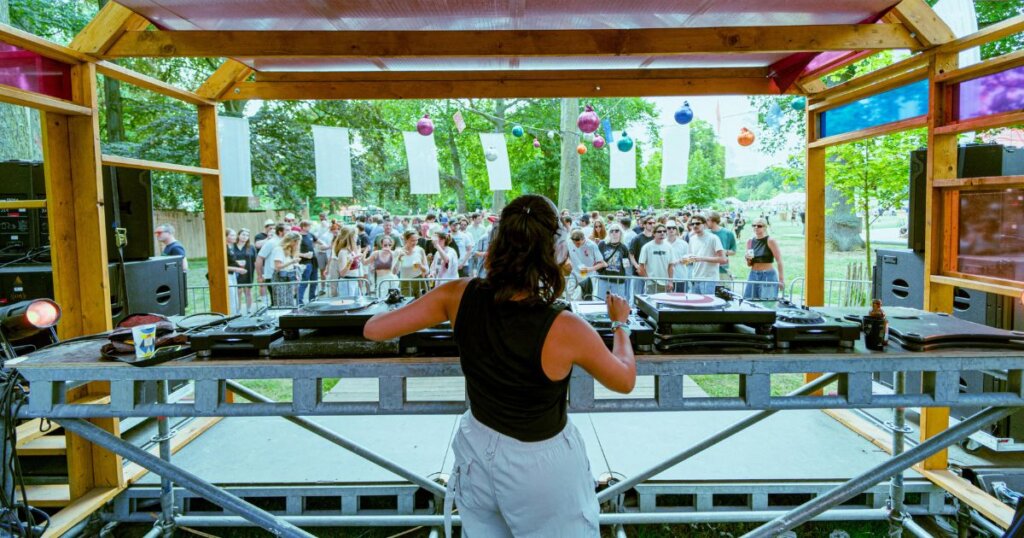
Social media’s promise of democratised reach has morphed into a vapid beast of its own. Anyone who’s seen TikToks of DJs dropping nasty transitions with the audience behind them – not facing the DJ, so everyone gets captured on camera – implicitly understands the value of a shareable, saveable moment. Photogenic-ness non-negotiable, deeper listening optional.
When visibility translates to bookings, what else is a DJ supposed to do?
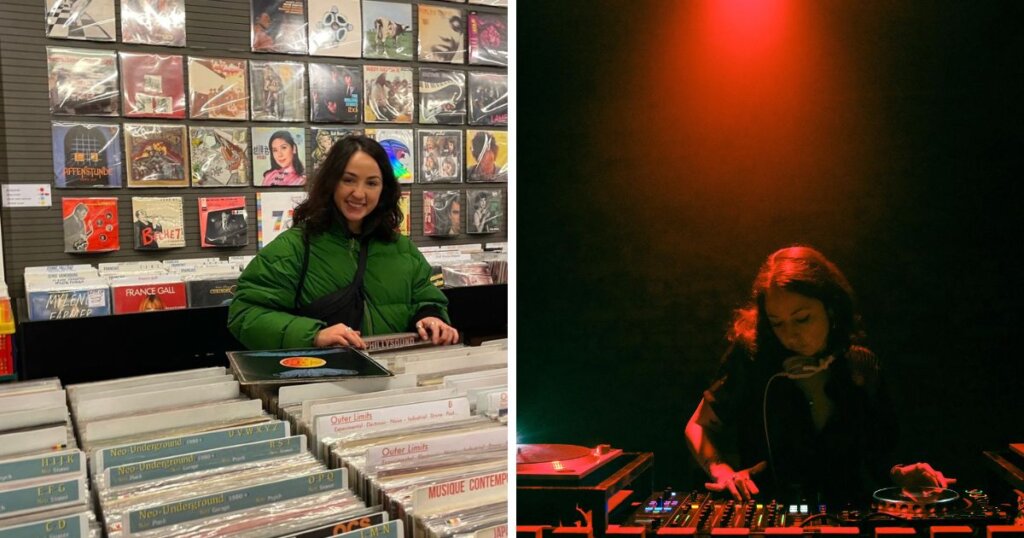
Paulita aka Paula Mellibosky is a Chilean-American DJ and selector based in Berlin who refuses to do it like that. The founder of CACTUS Berlin and deep cuts hunter is a lifelong devotee of raw disco, funk, and soulful house.
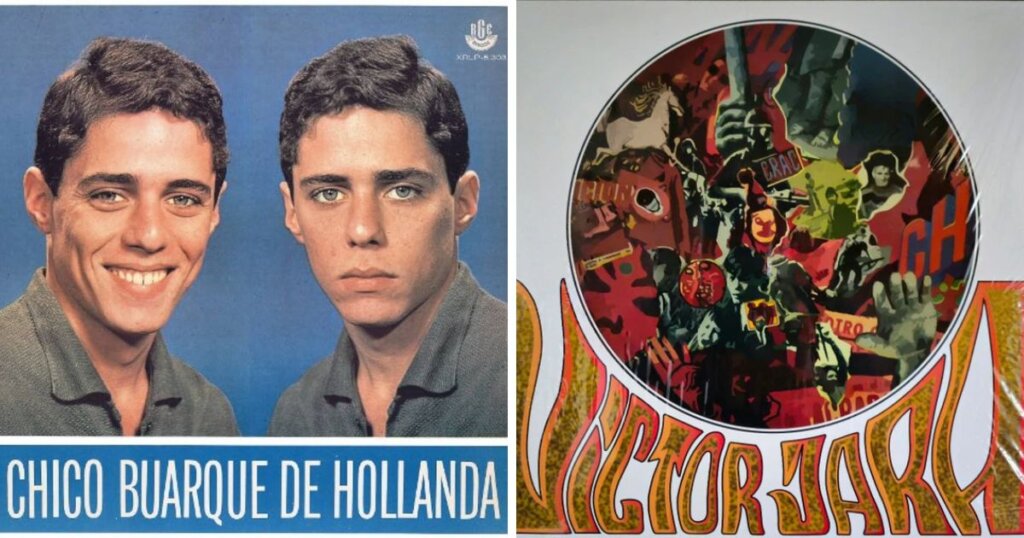
The digging started at age 5, buried in her parents’ records – from Chico Buarque to Victor Jara – long before Europe offered up an appetite for that same sound. Her ear runs on nostalgia over polish, funk over boom-boom.
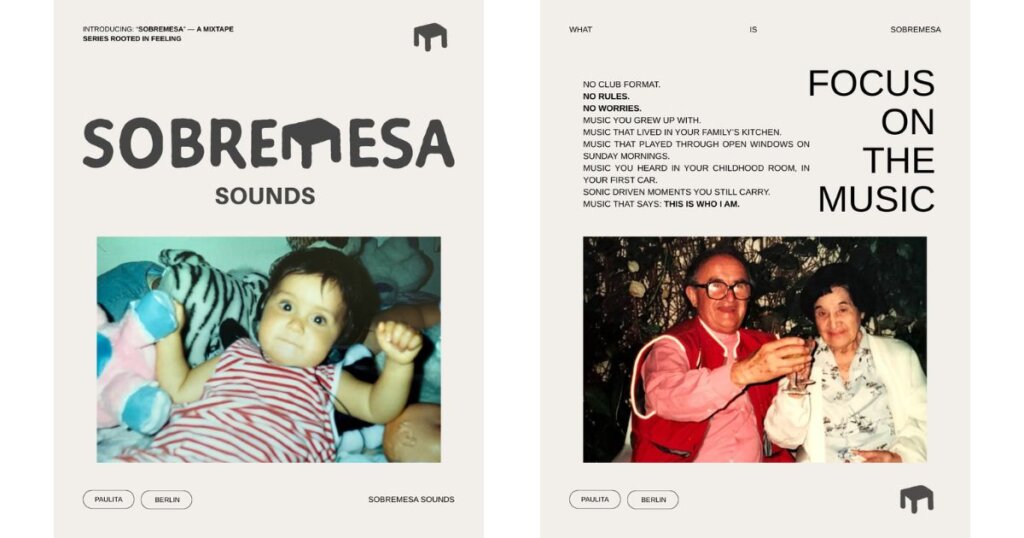
She also curates Sobremesa Sounds, a mixtape series inviting DJs to spin tracks that defined their childhoods. Sobremesa is that sacred post-dinner ritual when phones are down and stories flow, where Paulita’s parents first shared the music that shaped her.
13 episodes down, it remains her own quiet rebellion against the algorithm – no brief, no genre limitations, just curation from an unself-conscious place.
What many might not know is that her Master’s thesis was on “The Instagrammed DJ.” Crate digging led to a different kind of digging, into the psyches of Berlin DJs and the ecosystem around them. And it left her feeling cynical about the industry.
Hop continents with Paulita as she reveals her 70s-era military curfew influences, the pains of TikTokification, and the track that still makes her mom pull the stank face.
Your family is from Chile, you grew up in L.A. How does that trajectory show up in your curation?
I had a very diverse musical upbringing. My parents moved to L.A. in the late 80s. I grew up listening to a lot of Brazilian and Colombian music. Salsa and samba were engraved in my head. We had these thick CD books and my dad always made sure that we had a sound system installed.
But let’s not forget that my parents also grew up in Chile in the 70s. They were really into disco and loved artists like KC and the Sunshine Band, Chic and Donna Summer.
So while I was five years old dancing to cumbia, the next song would be like Chic. L.A. was where most of my musical knowledge was built.
And then… how did things evolve with your move across the Atlantic?
When I moved to Brussels for my Master’s degree, I saw how house music is treated in Europe. Brussels introduced me to the electronic house approach to parties. Then Berlin showed me a deeper, soulful, underground version of it.
I remember my first time there: August 2021. I’ve been dancing since I was young, and I obviously wanted to go out in Berlin.
A friend’s jiu-jitsu classmate was a DJ, and at the party, DJ Flo Real from Vienna played a track I’d dug in L.A. just a month earlier. I was like, “Whoa, people are playing this here too”.
And that’s when I realised there’s room for me here.
Take us back to an actual sobremesa in your parents’ house.
In my family, it was incredibly important to be present at the dinner table with no phones or TV screens. It was just a moment where you catch up with what happened during the day or discuss the upcoming weekend.
I remember always wanting to finish my homework by 17:00 or 18:00, because I could already smell whatever my mom had started cooking. We were tasked with setting the table, making the salads, etc.
I was a big Limewire fiend, and I would bring my laptop down and connect to the speaker.
I was obsessed with picking my parents’ brains to understand what they grew up with musically. While they met in university, Chile was under a dictatorship. But they were still partying underground.
My dad was a Pink Floyd kinda guy, while my mom was into those intense love ballads in Latin music called boleros. And sometimes I would start playing an old track, and she would be like, “How did you find this random Chilean artist?” And I’d be like, “I don’t know, I’m just obsessed with the sound!” [laughs]
The playlists I made would keep playing in the background, and once we finished dinner, we would stay at the table and keep talking. That’s the whole point of sobremesa. It’s that moment between deciding to wash the dishes or stay at the table. You just don’t want to leave yet.
Why did you feel the need to start Sobremesa Sounds? What did you feel was missing from the scene in Berlin, or Europe generally?
As a booking agent, I noticed clubs and promoters were only paying attention to one thing: can you bang a set within two hours? Even on SoundCloud, you get a sense of how someone can move a crowd, but not their actual taste, unless you know them personally.
Sobremesa was about inviting people I might or might not know well, and seeing what they bring to the table. The premise is simple: it doesn’t have to be rare stuff, just something from their upbringing, something that brought them to who they are as a DJ now.
I’d had this on my mind for two to three years. I just needed to reach a point where I knew enough people whose taste I respected, and get over the imposter syndrome of putting something out into the world.
At its core, it just needed to be done. I was tired of being recommended the same stuff on SoundCloud. I couldn’t handle the boom-boom anymore. We had to bring the soul back.
What changes when music relationships are built through apps instead of rooms?
A lot of us take this industry for granted. We get to know each other in an event space, but never really take the time to create a real connection. It brings more substance when you know people in real life.
Of course, there are people online that I’d love to invite to Sobremesa and have reached out to them on Instagram. But when I have a personal relationship with someone and hear their take on Sobremesa, I can just see the vision.
My favorite example from the last couple of months: I played a party in Hannover, Germany, called Sound Shack, run by Annito, Daenski, and Aqui. Daenski and I were picking each other’s brains on Spanish music, since she studied in Mexico.
She mentioned that a previous partner of hers had shown her this one song, by an artist called Buddy Richard, called Despídete Con Un Beso.
My jaw dropped. Buddy Richard was a close friend of my grandfather’s in Chile; my mom used to tell me stories about him coming over for family dinners. It was a crazy connection. And at the very end of my set, I played it, and we went crazy.
What pushed you to explore “The Instagrammed DJ” in your thesis?
There’s a constant pressure to post on social media: my face, not the music. I’ve never liked seeing myself that way. But as a booker, I see it from the other side too, helping my artists put themselves out there. It depends on the authenticity factor – whether you’re doing it genuinely or just following trends.
What really pushed me to study this was watching one DJ specifically. From 2018 to now, he’s had an insane growth trajectory. He started as a digger, curating and sharing records, and then he started posting short-form clickbait videos of like, easy grabs with mass appeal. I don’t like what this TikTokification has done to this industry.
Once he made that shift, he skyrocketed. Promoters saw the engagement, on and off the dance floor, and he got booked everywhere. I kept thinking: how is it that knowing how to edit a reel is what gets you gigs, not what you’re actually playing?
So I wanted to understand it from a promoter’s perspective. Are they actually making decisions based on this?
As a booker myself, I mostly share an artist’s music through their Bandcamp or SoundCloud. But when I was talking to bookers in Berlin for my thesis, a lot of them told me that many DJs would only send their social media profile when pitching for a gig.
On the other hand, I don’t bother myself with the idea that if I’m not posting, I won’t get big. I don’t care. And if I don’t make it as a result, that’s a testament to how the industry is being run.
“We’re not living in a TV show. We’re trying to make the dance floor a sacred place and keep it that way.”
Has “visibility replacing skill” shown up in your own career?
I don’t like to record myself while I’m playing. If people want to see what I’m doing, come to the gig. But when you get booked for a big gig, they want a press kit with professionally made videos. That’s why venues now have five photographers on the dance floor just trying to get the right angle.
We’re not living in a TV show. We’re trying to make the dance floor a sacred place and keep it that way. So I feel disappointed sometimes. But then of course I just roll my eyes and send them what I can.
Without naming names, what did a Berlin booker tell you that stuck with you?
I think the honesty of the bookers was the real revelation. One booker in particular, who works with one of the biggest clubs, admitted that the first thing he checks is Instagram. A lot of them stood by the fact that they’ve been around in this game for more than 10-15 years, and they’ve witnessed everything change.
Here in Berlin, a lot of funding has been pulled from arts and culture. So we are losing a lot of places, and venues are forced to compromise their integrity when it comes to booking just so that they can get people in the door.
And what gets people through the door? A DJ’s follower count.
So when the bookers were like, “We’re aware of this, but we have to accept it, and it’s a shame”, it was just kind of refreshing to hear them be forthcoming and say, “Look, this is the reality of the situation, I’m not going to bullshit you”.
In this scenario, Sobremesa Sounds turned out to be my rebel cause, because I’m hoping to give artists and DJs the space to be their full authentic selves. And it’s helped save my perception of the industry a bit.
Leave us with one record, one wrong idea, or one piece of advice.
I’m gonna do a bit of all, and combine the wrong idea with my advice: if you mess up on a set, let it be. Let people just hear a mistake and know that we’re not all crazy perfect DJs creating perfect blends.
Now for the record: I would recommend Elis (1974) by Elis Regina. She is my favourite Brazilian singer. She died quite young, she had a really bad addiction problem. But all that translated into her music. There’s just something really heart-wrenching about her voice.
On this record, there’s a song called Dois Pra Lá, Dois Pra Cá, which is like two steps there, two steps here. It’s referring to a dance of love and hate.
Whenever I put it on, my mom makes the stank face, and she’ll be like, “I love this one”. That has always been my goal: to find music that would make my mom feel that way. Family is the core of who I am and what I live and die for.
Utilizziamo i cookie per garantirvi la migliore esperienza sul nostro sito web. Se continuate a utilizzare questo sito, presumiamo che ne siate soddisfatti.