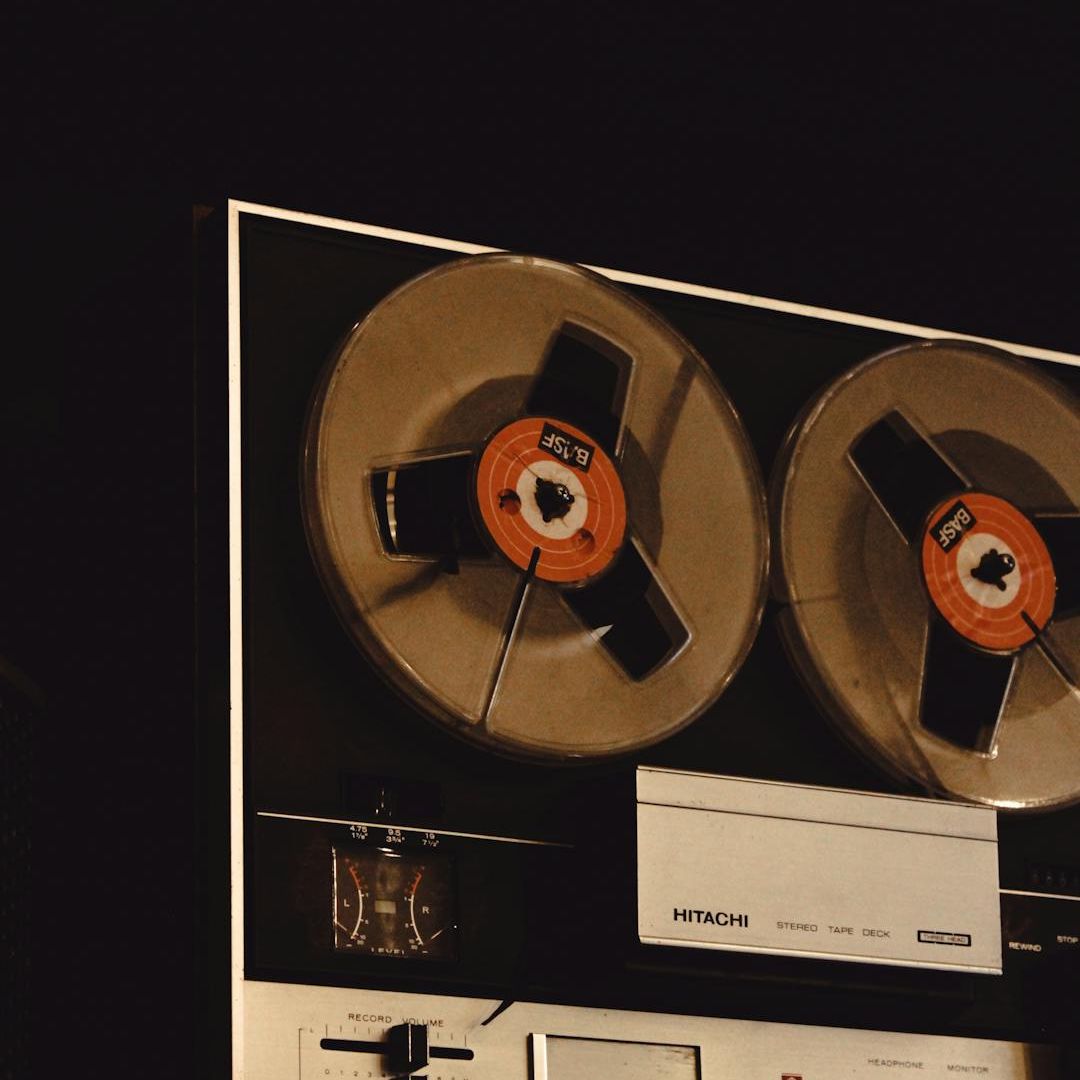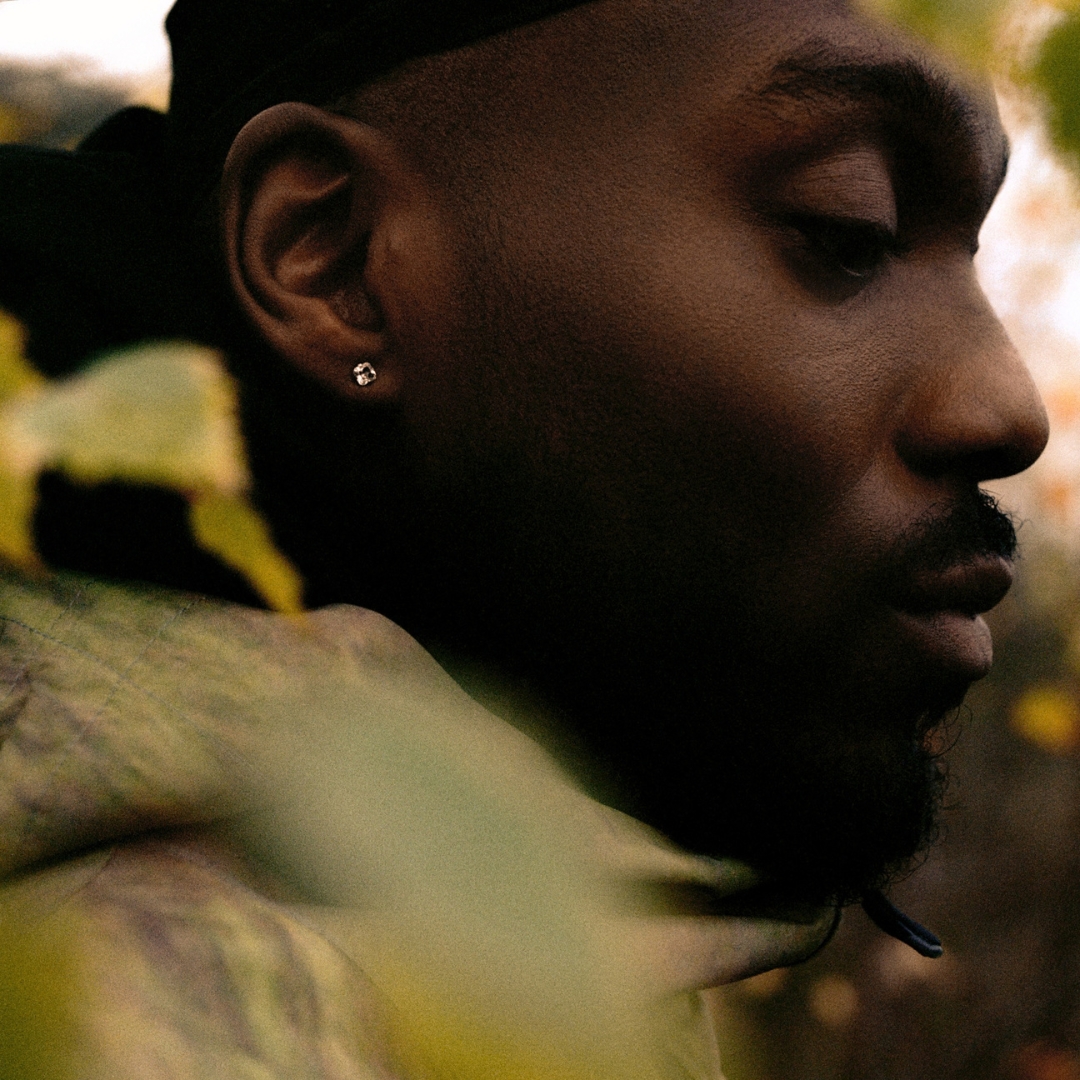
The Five-Year Journey Behind Morriarchi and Pertrelli Purple’s Light on My Feet
Morriarchi and I have been keeping tabs on each other for years. I’ve followed both his beatmaking and the slow, stubborn evolution of Group Bracil; he, in return, has always been punctual in sending over whatever he was working on next.
The latest transmission was Light on My Feet, his collaboration with Pertrelli Purple, a thoughtful, delicate wordsmith and the mind and pen behind an album that refuses to reveal itself all at once.
Five years passed between the first track and the finished record. In an industry increasingly built around instant reaction, disposable momentum and music designed to survive a release-week scroll, that kind of gestation feels almost deviant. Yet when the groove is solid, time does not erode it. It settles deeper.
That persistence runs through the entire album: the commitment to giving weight to a vision whose contours were not always clear, but remained alive, blurred like a body caught in motion.
But watch out: movement here is never purely geographical.
It means trains, streets, long walks and repeated journeys to London, but also the courage required to keep moving internally when the ground beneath you feels unstable. Lightness is not weightlessness. It is the strength to carry what weighs on you without allowing it to stop you.
The same instinct keeps Morriarchi and Pertrelli away from obvious trends. Their music may remain out of sight for most people, but that is partly the price of retaining its shape. Nobody can (or perhaps should) make work that belongs to everyone.
Light on My Feet therefore feels less like a collection of tracks than a place: half-lit streets, long train journeys, foxes crossing South London roads, and the uneasy sense that the ground might collapse if you stop moving.
We spoke about unlearning grime, leaving space for emotion, making albums rather than playlists, the realities of independent music—and why The Bourne Identity might explain the whole thing.
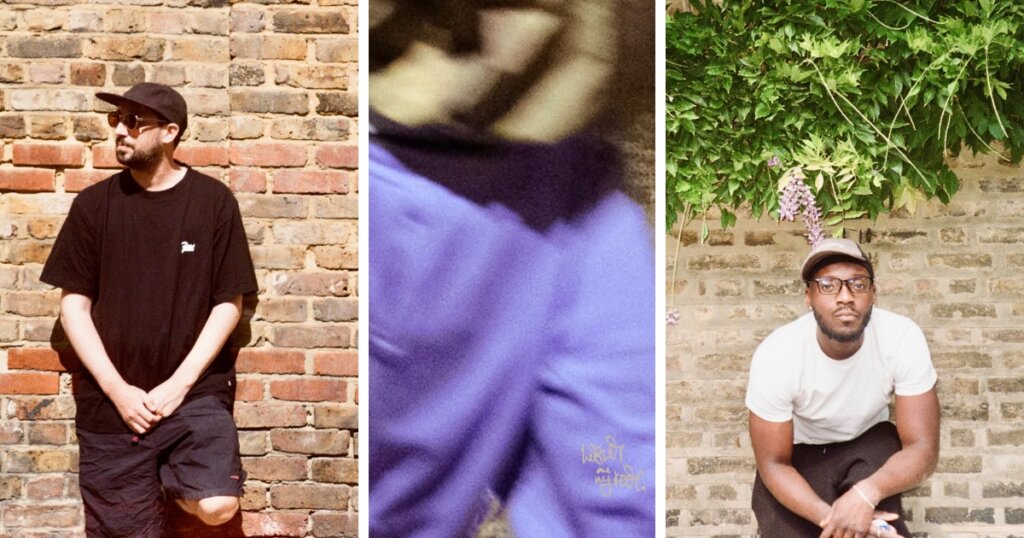
You both came up around UK rap and grime, but neither of you seems interested in staying inside one fixed tradition—lyrically or production-wise. What did you have to unlearn to arrive at this record?
PERTRELLI PURPLE: That’s a great question.
Sometimes, when people hear unconventional music, they assume the artist was trying to do one thing, couldn’t quite bridge two different worlds, got lost somewhere along the way, and the result ended up sounding weird as a by-product.
But asking what somebody had to unlearn implies that forging your own thing is a constant battle—which I believe it is.
I grew up making grime and hip-hop, and those things were all around me, but I was always trying to find my own voice in both. It’s good to take from the different things around you and allow them to become part of the answer.
MORRIARCHI: We’re rooted in different traditions and different ways of making music within particular environments. Like Trelli said, you’re not necessarily trying to do something different intentionally, but you do end up unlearning certain practices.
One thing I noticed during this project was the recording approach. Trelli started using more stripped-back, singular takes rather than layering everything up as he might have done on a grime-adjacent joint.
PP: That’s a big one I’m still learning.
Some of my earlier music probably wasn’t as palatable as it could have been because of the way I recorded it. Coming from a grime background, legibility isn’t necessarily the first consideration. It’s more about pace, room and feel.
I had to work out how to retain that feeling while becoming more minimal and stripped-back. I come from an environment where somebody’s credibility as a rapper can be based purely on their words and how those words make you feel. Then I had to think about how to make that work across different formats and for people coming from different genres and understandings.
For me, it became about being more minimal. Less is more.
M: I’d echo that from a producer’s standpoint. It was about making space—not only for the lyrics, but for the story and the emotion behind that story.
The collaboration feels genuinely cohesive. It sounds like a complete album rather than a handful of tracks pushed together. When did you realise it could stand as an important piece of work?
PP: I can’t even guess what Morri’s going to say, but what made it important for me was the fact that I’d known him for a good amount of time.
We’d been outside doing different things, making music and going to shows. I enjoy making music with people I can sit down with and have an in-depth conversation about culture and life. If I’m happy to be around that person, I’m much happier focusing on making something with a shared vision.
Let’s expand on the title. Light on My Feet can suggest freedom, balance and otherness. Listening to the record, I also hear the not-so-subtle need to keep moving. What does the title mean to each of you?
PP: We were already well into making the record—most of it might have been finished—before it had its final name.
At some point I’d written something called Light on My Feet. I wasn’t sure about keeping the title, but when I listened back, I heard all the different ways I’d mentioned light and all its implications. In the intro, light plays with me. In the second song, I see the light flicker. There were loads of allusions to it before I’d even settled on the name.
For me, it means having to keep moving to stay light. Needing to stay agile.
There’s a line buried in the mix where I say it feels as though the ground is crumbling beneath me. That creates this need to keep moving for very specific reasons.
The whole project came from me travelling down to London when I wasn’t really supposed to. I didn’t have the time. I should have been focusing on other things, but I kept coming down to write about how I felt with Morri—even though my life was crumbling at the time.
You’ve known each other for a while, and that chemistry is evident. The writing carries real emotional weight, while the production moves gently around and underneath it. Was that tension central to the record, or did it emerge naturally?
PP: It happened naturally.
Each beat Morri showed me—and each one I gravitated towards—had its own character. We hadn’t made that many songs before we began visualising a full project, but we could already see what we had and the kind of atmosphere we were creating.
M: The intro, Clean Slate, was the first song we ever made together, back in 2021.
We were mates before the project, so that song was a by-product of hanging out. Then a couple of tracks were peppered in between. I think PoV was made during that period, and a few other songs were conceived at different points.
The majority of the album, though, was made between 2024 and the beginning of this year.
PP: We had two particularly good runs that created the structure of the project. They became its two main parts. Then there were songs we’d already made that, as the album took shape, revealed themselves to be part of the same story.
The beats contain details that remain half-hidden: distant voices, keys, breaks emerging gradually, even recognisable samples treated very subtly. How do you decide what the listener should hear clearly and what should remain in the shadows?
M: It was about giving each track its own character while allowing everything to feed back into everything else.
That might sound like a wishy-washy answer, because of course you want the tracks on an album to relate to one another. But, as you said, a lot of projects can feel like collections of tunes pieced together.
I’ve never really come from that school. I’ve always loved producer-led albums where one thing leads into the next—your DOOMs, your Madlibs and people like that.
Trelli is versatile, so I knew we could have a completely drumless song that essentially builds a mood until the end, while the next track becomes its actual crescendo. It was all part of the same conversation.
Did the beats change once Pertrelli’s vocals arrived? Did you shape particular elements together, or would Trelli take a finished beat away and return with his ideas?
PP: Some of them changed. We altered a few sections, while other beats stayed almost exactly as they were.
With some producers, a beat is never finished. In the positive sense, that’s something I hear in Morri’s work. I can record a track and then notice all the small details he adds afterwards. They might not even be production choices as such; they could be mixing decisions that emphasise certain parts, shift the weight of the track and bring it new life.
At the same time, Morri can also recognise when a beat already contains everything it needs. Maybe he’ll add a textural sound at the end because I want to introduce a voice and he wants to give it some weight. But in many cases, the beats work and remain exactly as they need to be.
M: I like going back to a track once I have the vocal. That’s when you can truly finish it and give it the chef’s kiss—making additional mixing and sequencing choices that bring the song to life.
When I was younger, though, I used to go too far. I’d remix a song to the point where somebody would say, “Well, now it’s a different song. You’ve changed it too much.”
With some of these tracks, I decided the mood was already right. There might be a strange bass rumble here or something imperfect there, but Trelli had responded to that atmosphere. I wanted to capture that moment.
If I’d gone back and changed the entire sound, it would have thrown him off, and we would have lost the initial creative spark. Sometimes the beat is done.
Trelli, your writing feels conversational, but the meaning reveals itself slowly. Where does a verse usually begin for you—with an image, a phrase, a rhythm, an experience or a book?
PP: Once we’d made a couple of songs and decided to create a wider project, I knew I wanted it to have a narrative. I wanted it to feel like a story.
A lot of the writing was inspired by the work of an artist I’d seen. He often depicts people outside in liminal spaces, navigating the night. That was the atmosphere I wanted to convey because it reflected how I felt while making the record: catching trains, trying to get home after recording and generally being out and about.
A few re-recordings might have been done at home, but I spent most of my time thinking about the project and listening to the beats on long journeys at night, either travelling to Morri’s or sitting on the other side of the country writing in his house.
I was trying to create imagery while also painting a picture of an emotion. I’d look at those artworks, visualise something while listening to the beat, then try to switch it all off. Hopefully, whatever surfaced afterwards would feel true to me.
That’s how I try to write.
Coming from grime, what could you express over Morri’s beats that you might not have expressed over somebody else’s?
PP: It isn’t really a question of genre or tempo, because Morri gave me such a wide range of beats.
His music had space and emotional resonance. It could open me up and make me say something more vulnerable than might have made sense on a different track. The structure of a sound—the different things you hear within it—makes you focus on different vibrations.
I haven’t yet had many song-by-song conversations with people about the album, but a track like *POV* probably doesn’t come across as desperate, emotional or emotive in the same way as some of the later songs.
Across several tracks, I was trying to capture the same time, space and feeling. In a way, I was trying to write the same song—or write from the same perspective—but place it within a new landscape.
I let the music dictate what opens up and what comes across. I can hear something in it and follow it. That frees me to say things I might not feel comfortable saying over something more aggressive or busy.
What did you change in each other’s way of working? It can be anything—from the creative process to the type of kush.
M: I appreciate you saying that, because we’re both probably quite stubborn in our ways of working.
I’ve been making music the way I make it since around 2015, maybe even earlier, and I’ve done a lot of different collaborations. You always work differently with different people.
I think you can come out of one release assuming the next one will work in the same way, and that’s always a mistake. At first, I thought, “We’ll finish this track in one session.” Then we wouldn’t. We’d return to it and change things.
Eventually I realised that was simply Trelli’s process. You can’t force it, because then it becomes a different kind of song. For him to get what he got out of this record—which was special and wasn’t an easy process—he needed time and space.
He was also adaptable and open to lots of ideas. He allowed me to do my thing, particularly when it came to the mix, the mastering and adding all the bells and whistles.
Some producers will hand something over and say, “Do whatever you want—pitch it up, pitch it down, chop it or add to it.” I’m not quite like that. Every collaboration depends on the conversation. It isn’t that a beat can never be touched once a song has been made, but there still needs to be an understanding.
I’d like to think I gave Trelli freedom when he needed it, and he gave me that same freedom when it came to finishing the songs.
PP: The bottom line is that there was a lot of trust. We trusted each other to do our jobs.
I’m grateful that I was given the space and time to figure things out. When I listen to the project, there are moments where I return after a verse or chorus as a different person because I’ve lived since I recorded the previous section.
Time is a major factor that I love incorporating into projects. This is personal, so I’m trying to take a picture of specific moments.
I’ve worked with other producers and wanted to fiddle with this or change that, but it wasn’t necessary here. Again, that comes down to trust. I was less inclined to say, “What if we did this?” Instead, I looked at the small vignette Morri was offering and tried to visualise myself within it.
That allowed him to do his thing fully while I did mine.
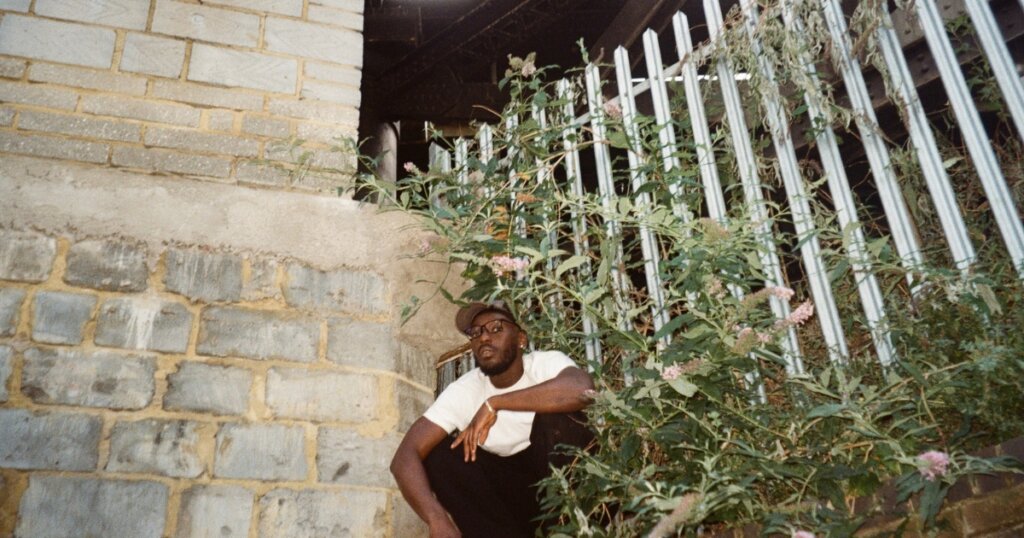
The collaboration between you feels completely natural. What about the guests? Were the songs written with particular people in mind, or did those collaborations emerge once the tracks had found their identity?
M: Jadasea was probably the first guest. We made much of the album in roughly the same sequence in which it appears, particularly at the beginning.
I already knew Jada, although it was one of the first times we’d linked up musically. We had a lot of mutual interests, and when I told him I was starting this project, he was excited to get on it.
He’s a lyricist, so he recognised what was happening. He said it was a good project for lyricists: something that makes people return to the act of writing, enjoy the writing and decode it.
Swish was also a big part of the project, and that feature happened very organically. I came around, and I think he expected us to get on a Zoom call with Trelli. Then I was like, “Oh, he’s here.”
Semiratruth and I linked through a radio show when they came to the UK, and we’ve been friends ever since.
That became one of my favourite songs. Everybody killed it. It felt like a song I’d somehow already heard. Even though I helped make it, I can appreciate it as a listener.
We’d also known KAYANA for a while through the Koncept Jack$on project. We got in touch and made a couple of songs around that time. That was another really cool track to make, and Trelli already had a relationship with KAYANA.
PP: That’s the homie.
We had a song on the Koncept Jack$on project and had done shows together. We listen to each other’s work despite being so far apart—across the pond and all that. We help each other out and work together every now and then.
Which track changed the most during the process?
M: I’m trying to think, because I don’t feel as though we had to chisel away at anything too heavily.
I’ve worked on projects where somebody needed to lace a track fifteen different times, or I’d obsess over the drum mix, the mastering and endless back-and-forth. I don’t think we had one track that required that level of change.
Trelli might have more insight into it.
PP: I completely agree.
Our method was about getting in sync and developing similar expectations for what the outcome could be. Once that happened, we simply made the songs. The conversation became: do we keep this one or not?
Some song structures changed. Small World changed quite a bit. We added verses, swapped them and rearranged them. That happened on several songs. I had my parts, Morri had his parts, and the verses might move around.
If something didn’t feel right sonically, it became one for the vault. But the tracks we retained were already there sonically.
There was one entire song—and I won’t say which one—that was written over a completely different beat and then moved onto something else. It sounds completely at home now. That actually happened more than once.
M: We definitely experimented. We tried ideas on other tracks and with other guests. They didn’t require endless revision; they were simply experiments within the album.
PP: The song with the most versions was definitely A Letter to You.
Originally, it was only going to be a skit—probably one of the shortest moments on the album. Now it’s the longest song.
Morri had that beat for a while, and I’d heard it loads of times. There’s even a clip from when we did Balamii Radio where he’s playing it in the background.
There was already a vocal on it, with a refrain and a verse. I thought it was fire. I didn’t want to write anything over it, but I wanted it on the project.
Morri said, “Nah, it makes more sense if you say something on it.”
I suggested putting the clip of me talking at the end. He agreed, but still thought it could use a verse. I didn’t see it at first. I didn’t think it needed anything else.
Then I listened to the rest of the project. People kept saying there weren’t many repeated sounds and that the album kept moving throughout. I realised I hadn’t said anything over a track that sounded quite that resonant or deep.
So I decided it made sense to add more verses. I added one, we listened and changed the arrangement. Then I added another verse that was supposed to replace the first one, and we changed the arrangement again. Eventually I realised it made sense to keep both.
Then we changed the arrangement once more—and that was it.
The album feels unmistakably British, but it doesn’t perform Britishness—which is something I really enjoy. Was that conscious, or did it happen as naturally as the rest of the process?
PP: I’ve been working on several different things, but I knew this project would probably have the most international appeal.
I thought about how to communicate the feeling of being outside and what I was experiencing in a specifically UK way.
Some of Morri’s beats sit at 140—or 70 beats per minute, depending on how you hear them. If I’d wanted a different feeling or style, I might have rapped at half the speed. I could imagine a US rapper on some of those beats, and they probably wouldn’t vocalise that quickly or enter the track in the same way.
But I thought about where we were, where I was and the feeling I wanted to convey.
I was conscious of the record being from the UK. At the same time, especially because I’m not a Londoner, I didn’t feel the need to perform that identity too explicitly.
I know I exist in an obscure, niche space that can translate in many different ways. I felt that if I was truthful enough, described things in a particular way and moved at a pace that made sense, it could resonate differently with different people.
The artist who inspired some of the writing painted Baltimore landscapes. But because of the brickwork, those places felt like the UK to me.
Being subtle was probably the best way to approach it.
Let’s play a game called What If… Trelli, if you had to choose your favourite line from the album, which one would it be?
PP: My favourite—or the line that feels deepest and most real to me—is in the clip at the end of A Letter to You:
“Everything sounds different than it did the other day, or a day ago.”
Something life-changing had happened to me the day before. For me, that’s the line of the entire project. It’s what the whole thing is really about.
I needed to include that clip because I couldn’t have written anything more pertinent than what I actually said in that moment. It had to be that.
Morri, if you had to choose your favourite beat from the album?
M: That’s tricky. Maybe Branches.
It took a slightly different approach, although it isn’t necessarily unusual in terms of the things I make—because you don’t release everything you create.
That was one of the fun things about this project. I got to work on something that felt like an in-between point connecting the different kinds of music I make. *Branches* brought that into reality in a really cool way.
It wasn’t as quick a process as some of the other tracks, and I think you can hear how the extra time paid off.
If Light on My Feet were a place rather than a record, where would we find ourselves—and what time of day would it be?
M: I listened to the album a lot while travelling.
Recently, I’ve been walking down by the river. There’s a path that cuts through and takes you onto the riverbank. That’s where I picture the album.
There’s a particular spot where I sit down at the corner of the river and listen. I was going there while we were making the record, so I always place the album within that landscape.
PP: It’s very much experienced on my feet—no pun intended.
I also think about when Morri lived in South London. You could see that classic South London landscape stretching towards central London and the river.
There’s the orange glow, foxes on every road and the visual interest of seeing things far away across the landscape. Those were the kinds of pictures I was looking at.
One of the images connected to the title shows a person being bathed in the light from a streetlamp—a light coming down from above.
So it would be somewhere where nature is still fighting the metropolis.
If Light on My Feet were a movie, which one would it be?
M: Damn. We watched loads of films while we were making it.
I always have films playing in the background, although we were probably watching some bullshit—not exactly highbrow cinema, sadly, even though we’re both into good films.
I’ve got it: Rushmore.
I don’t know why that came to mind. It’s a unique piece. It’s touching, but it also has a comic edge. The album doesn’t have a huge amount of that, but it has its own quirks—similar to what you said about its Britishness.
It uniquely conveys different emotions. That’s simply what jumped out at me.
PP: We had loads of crazy movies playing in the background. I don’t think Rushmore was one of them, but I’m going to watch it soon. I’ll add it to Letterboxd.
For me, it would probably be The Bourne Identity. That’s partly a meme—a running joke between Morri, me and a few other people. But it’s one guy who’s very confused, running around and trying to make sense of everything.
Obviously, it’s a classic action movie, whatever. But I also find it deeply funny. That’s the one for me, bro.
Morri, if Group Bracil were an animal, what would it be?
M: A cat.
Anything else you’d like to add about future projects, touring or Light on My Feet? More is coming, right?
PP: I’m just telling stories.
I experienced the story behind this record, and now I have another story. But I want this one to be out in the world and properly lived first.
We have more things coming that will give it additional context. I’m really happy with how it has been received. People can tell it’s a story and see the narrative around it.
I want to sell that further. I want people to see the picture more clearly, and I’ll do everything I can to get that across.
One final question. Leave a message for our readers, and we’re off.
PP: Whether you’ve heard the record or you haven’t, go on a nice long walk.
That’s related to the project—and also completely unrelated to it.
Enjoy a nice long walk, bro. I think everybody needs one.
That’s it.
M: He’s right, man. I second that. Definitely.